
 Commercial
 Commercial Solar Across the UK: 2026 Regional Cost Breakdown
Commercial solar costs vary significantly by region. A UK-wide breakdown of what businesses actually pay, what grants apply, and what ROI looks like in 2026.
In This Article
- 1. Why Regional Location Changes the Price of Commercial Solar in 2026
- 2. System Size and Cost Bands: What 20–100kWp Actually Costs Across the UK
- 3. Yorkshire and the North: Competitive Pricing and Growing Installer Capacity
- 4. Power Purchase Agreements and the Alternative to Capital Expenditure
- 5. ROI Timescales and How to Model Payback Accurately
- 6. Choosing the Right Installer: Questions to Ask Before You Sign
Why Regional Location Changes the Price of Commercial Solar in 2026
When a business owner in Leeds compares quotes with a counterpart in central London, the gap in commercial solar installation costs can be startling. Across the UK, regional labour rates, grid connection complexity, and roof access logistics combine to create price variances of fifteen to twenty percent between the South East and the northern regions. Installers like Carbon Legacy in the East Midlands often highlight that their clients benefit from lower scaffolding costs and shorter DNO queue times compared to equivalent projects in the capital — practical advantages that feed directly into the final invoice.
Nationally, the commercial solar market is also shaped by tax incentives that businesses should factor into their financial modelling before requesting quotes. Under current Treasury rules, companies can write down qualifying expenditure through Super-deduction and capital allowances, reducing the effective net cost of a system significantly in year one. For a business installing a 50kWp rooftop array, this tax treatment can shave tens of thousands of pounds from the capital outlay, changing the payback calculation from six years to nearer four.
Understanding these regional and fiscal dynamics is essential before a procurement team puts out tenders. The sections below break down typical costs by region, explore the impact of system size on unit price, and explain what businesses across the UK should ask every installer before signing a contract.
System Size and Cost Bands: What 20–100kWp Actually Costs Across the UK
The most common bracket for commercial rooftop solar in the UK sits between 20kWp and 100kWp — large enough to meaningfully offset energy bills for a warehouse, a distribution unit, or a medium-sized retail outlet, but below the threshold that triggers the most complex grid connection assessments. At the 20kWp end, installed costs in 2026 typically range from £18,000 to £24,000 depending on region, roof type, and whether battery storage is included. A 100kWp system, benefiting from economies of scale on panel pricing and inverter costs, usually comes in between £70,000 and £95,000 fully installed across most of England.
The South East and Greater London premium is real and persistent. London labour rates for electrical and roofing sub-contractors are consistently higher, parking and access permissions add administrative costs, and DNO applications in constrained urban grid areas often require additional engineering studies. Businesses in Birmingham, Manchester, Sheffield, and Leeds generally receive more competitive quotes for equivalent work, and lead times tend to be shorter because installer capacity in those markets is less stretched than in the commuter belt.
Above 100kWp, costs per kilowatt-peak begin to fall again, but the project complexity increases. Systems above 50kWp typically require a G99 connection application to the local distribution network operator, which involves engineering assessments, potential reinforcement contributions, and approval timescales that can run to several months. Businesses planning larger arrays should build DNO application costs and timescales into their project programmes from day one.
Thinking about going solar?
See exactly how much you could save
Use our free calculator to get instant savings estimates based on your bill and home size.
Yorkshire and the North: Competitive Pricing and Growing Installer Capacity
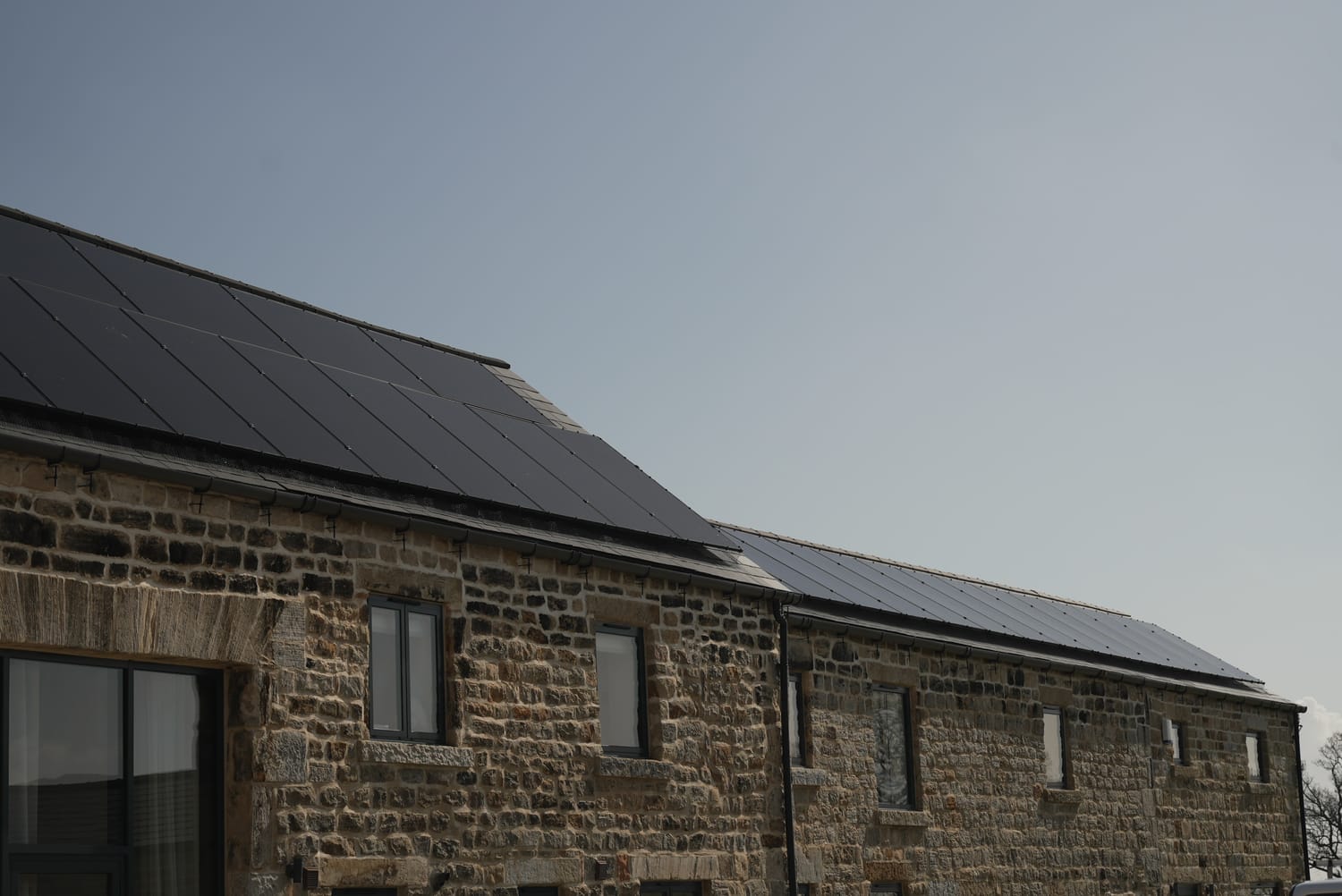
Yorkshire has become one of the most active commercial solar markets in the UK outside the South East, driven by a combination of large industrial roofscapes, a growing base of certified installers, and energy costs that have made the business case for renewables compelling across manufacturing and logistics. Teams such as Premier Electrical Renewables across Yorkshire are completing installations ranging from agricultural barn arrays in the Dales to full rooftop systems on distribution centres near the M62 corridor, demonstrating the breadth of commercial demand in the region.
Unit costs for commercial solar in Yorkshire and the Humber run roughly ten to fifteen percent below London and the South East on a like-for-like basis. A 50kWp system that might cost £50,000 fully installed in a London suburb could be completed for £42,000 to £45,000 in the Leeds, Bradford, or Sheffield metropolitan areas. That gap is primarily a function of lower sub-contractor day rates and the relative ease of accessing large, flat industrial roofs compared to the older, more varied building stock in the capital.
The North East, North West, and Yorkshire corridor also benefit from stronger grid connections in many industrial estates, having been designed originally for heavy manufacturing loads. This legacy infrastructure sometimes makes commercial solar DNO applications more straightforward than in suburban South East locations where the local grid was built for domestic demand and lacks headroom for significant export.
Power Purchase Agreements and the Alternative to Capital Expenditure
Not every business wants to own its solar installation outright. Power Purchase Agreements have matured significantly in the UK commercial market and now represent a credible alternative for businesses that prefer to avoid capital expenditure while still reducing energy costs from day one. Under a typical commercial PPA, a third-party developer funds, installs, and maintains the system on the client's roof, selling the generated electricity to the business at a fixed rate below the grid import tariff — often between 8p and 14p per kilowatt-hour depending on system size and agreement length.
PPA terms in 2026 typically run between ten and twenty-five years, and contract structures have become more flexible in response to business demand. Break clauses, portable agreements that follow a business if it relocates, and hybrid structures combining partial ownership with a PPA are all available from larger developers. The key due diligence question is whether the PPA rate includes annual escalators, and if so, at what percentage — a contract with a three percent annual uplift will look very different in year fifteen compared to a fixed-rate agreement.
Enhanced Capital Allowance treatment remains the strongest argument for outright ownership where cash flow allows. A business that owns its array captures both the energy cost savings and the full tax write-down, and retains the asset value when the payback period is complete. For businesses with strong balance sheets and a stable occupancy outlook, direct ownership with ECA treatment continues to deliver the best total return over a ten to fifteen year horizon.
ROI Timescales and How to Model Payback Accurately
Return on investment for commercial solar in the UK in 2026 typically runs between four and seven years for systems installed without battery storage, and five to eight years when battery storage is added to the package. The payback horizon depends heavily on the business's daytime energy consumption profile: a warehouse running round-the-clock refrigeration or a factory on continuous production shifts will see far faster payback than an office building that is largely empty at weekends and overnight. Specialists such as Leicester's Energy Concerns routinely model half-hourly consumption data against generation profiles before recommending system sizes, ensuring clients are not sold oversized arrays whose excess export is credited at a fraction of the avoided import rate.
The Smart Export Guarantee provides a revenue floor for exported power, but at rates typically between 4p and 8p per kilowatt-hour it should be viewed as a bonus rather than a primary revenue driver. The real value of commercial solar lies in displacing grid imports during working hours. This makes load profiling the single most important exercise before finalising a system specification. Businesses should provide at least twelve months of half-hourly smart meter data to any installer offering a serious financial model.
Working with MCS-certified commercial installers provides an additional layer of financial security beyond technical quality. MCS certification requires adherence to design and installation standards that underpin manufacturer warranty claims, and for businesses that later want to include the solar array in a building valuation, MCS documentation is often a surveyor requirement.
Choosing the Right Installer: Questions to Ask Before You Sign
The commercial solar market contains a wide spectrum of installer quality, from national EPCs managing projects from a distance to regional specialists who carry out design and installation with their own direct workforce. Regional specialists often deliver better post-installation support and faster response times for maintenance callouts, which matters considerably when a system fault is costing a business money in lost generation. AMP Pro Electrical in Doncaster exemplifies the model of a locally rooted electrical contractor that has built a dedicated renewables capability alongside its core commercial electrical work, giving clients both technical depth and genuine local accountability.
At the other end of the geographic spectrum, businesses that operate across multiple UK sites benefit from working with installers whose networks span regions. Wiltshire installer Lumos Energy demonstrates how a strong regional base can support a wider national reach for commercial clients, maintaining consistent standards across different project locations. For multi-site procurement, asking whether an installer can manage DNO applications, scaffolding, and commissioning consistently across different network operator areas is a critical due diligence question.
Before signing any commercial solar contract, businesses should confirm: MCS certification status for the installing company; whether the structural survey and load assessment are included in the quoted price; how DNO application costs are handled if additional network reinforcement is required; what the operations and maintenance package covers and at what annual cost; and whether the financial model has been stress-tested against a scenario where grid electricity prices fall rather than rise. Installers who answer these questions clearly and in writing are the ones most likely to deliver projects that perform as promised.
Get Expert Advice from ElectriFusion Solutions
At ElectriFusion Solutions, we are MCS-certified, NAPIT-registered, and TrustMark-endorsed specialists in solar panel installation, battery storage, and EV charger installation across South Yorkshire and Northern England. Our team has completed over 1,000+ installations and maintains a 4.7/5 rating on Trustpilot from 45 reviews.
Whether you are considering solar panels for the first time or looking to add battery storage to an existing system, we offer free, no-obligation site surveys with transparent pricing and no pushy sales tactics. Every installation comes with our industry-leading warranty package, including 15 years workmanship, up to 15-year inverter, and up to 15-year battery warranties.
Contact our team today on 01302 203 755 or request a free survey online. We cover Doncaster, Sheffield, Rotherham, Barnsley, and the wider South Yorkshire region.